
Company Written Practice | EN 4179 · NAS 410
The People Behind Reliable Inspections
Yet inspection reliability still depends on the people behind the technology.

Non-destructive testing has evolved considerably. Advanced inspection techniques, sophisticated equipment and powerful software have transformed how inspections are performed and evaluated.
Their knowledge, experience and judgement remain essential to recognising indications, understanding limitations and making sound technical decisions. Human factors – from fatigue and distraction to communication and organizational pressure – continue to influence inspection performance.
Personnel qualification and certification are therefore much more than administrative requirements. They are fundamental to inspection reliability and aviation safety.
A well-designed Company Written Practice establishes the framework through which an organisation develops, assesses and maintains the competence of its NDT personnel.
And the quality of that framework matters.
When a Written Practice Helps – and When It Becomes a Problem
A good Written Practice does more than demonstrate compliance with EN 4179 or NAS 410.
It gives the employer a clear and manageable system for personnel qualification and certification. Responsibilities are understood, decisions are consistent, records are meaningful, and the organisation can demonstrate how its personnel meet the applicable requirements.
When properly designed, the Written Practice supports daily operations rather than complicating them.

A poorly developed document can have the opposite effect.
Missing or incorrectly interpreted requirements may create compliance gaps. Unclear responsibilities and inconsistent terminology can lead to confusion in training, examinations and certification decisions. Unnecessary restrictions can introduce administrative burdens, reduce operational flexibility and make the system difficult to maintain.
More seriously, weaknesses in the qualification framework may allow personnel to progress through training and certification without adequate assurance of their actual competence.
A document may appear complete and well structured while still failing to establish the controls an organisation needs in practice.
The challenge is therefore not simply to incorporate every applicable requirement. It is to understand how those requirements interact with the organization’s activities, responsibilities and existing systems, and to translate them into a coherent, practical and sustainable framework.
The best Written Practice is not necessarily the most detailed or restrictive. It is the one that establishes the right controls, supports competent personnel and works reliably within the organisation.
ALTIORA / METHODOLOGY
How Altiora Approaches the Written Practice
No two NDT organisations operate in exactly the same way.
Methods and techniques differ. Customer and OEM requirements vary. Training and examination arrangements, personnel structures, approval environments and internal responsibilities can be very different, even between organisations performing similar inspections.
A Written Practice must reflect these differences without compromising compliance.
Understanding the organisation before writing the document
Our structured Company Written Practice Questionnaire is designed to establish a detailed picture of the customer’s NDT operations, applicable requirements and existing personnel qualification arrangements.
It explores how the organisation works, which requirements apply, how responsibilities are assigned and which decisions have already been established.
Importantly, the questionnaire also identifies matters that require specific decisions by the employer or Responsible Level 3.
We do not make those decisions by assumption.
Where clarification is needed, we work with the customer to establish an appropriate solution within the applicable regulatory and standards framework.
The aim is to understand the customer’s existing system well enough to develop a Written Practice that fits naturally within it.
A framework built around the customer
The information collected through the questionnaire forms the basis for developing a company-specific Written Practice.
Applicable EN 4179 or NAS 410 requirements, regulatory expectations and relevant customer or OEM requirements are considered alongside the organisation’s established processes and technical responsibilities.
Where existing arrangements are suitable, they are preserved.
Where gaps, inconsistencies or conflicting requirements are identified, they are brought to the customer’s attention and resolved before being incorporated into the document.
Where organisational choices are permitted, the alternatives can be discussed with the people responsible for making those decisions.
This approach avoids introducing unnecessary restrictions or creating parallel systems that duplicate the customer’s existing management arrangements.
Our role is to provide the technical expertise, regulatory understanding and structured development process needed to make that framework clear, compliant and sustainable.
The result should be a document that the organisation can confidently implement, maintain and use as a practical basis for personnel qualification and certification.
And ultimately, that is what matters most.
Not simply a document that satisfies an audit, but a system that helps the employer develop, evaluate and maintain competent NDT personnel — and supports the reliable inspections on which aviation safety depends.
ALTIORA / SERVICES
What Altiora Delivers
Developing a new Written Practice
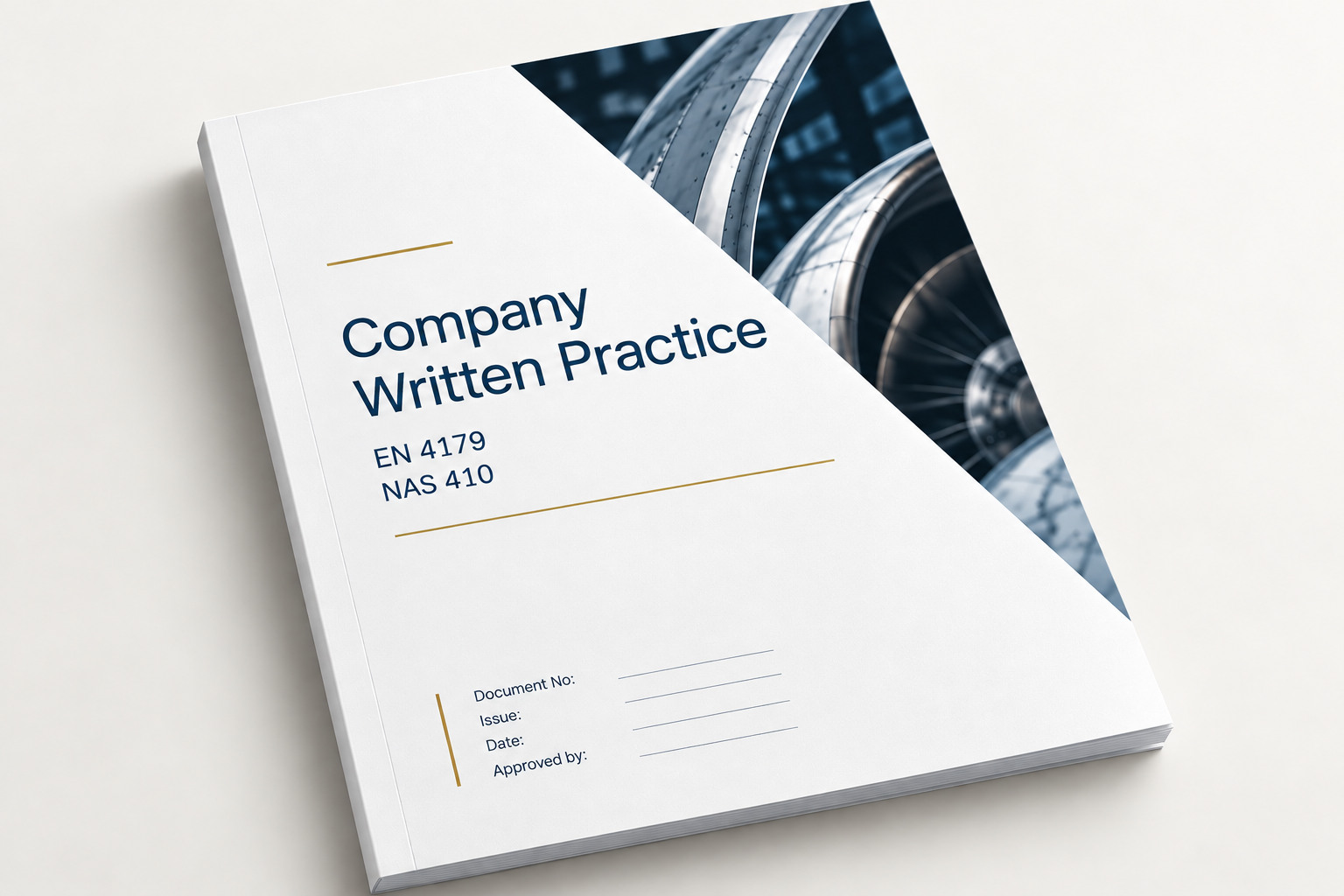
Whether you are establishing an NDT qualification system for the first time or developing a new Written Practice for an existing organisation, we can help you build a framework that reflects the way your organisation actually operates.
We develop company-specific Written Practices in accordance with the applicable edition of EN 4179 and/or NAS 410.
Where relevant, we also address additional regulatory, Nadcap, customer and OEM requirements, including those applicable to EASA Foreign Part-145 organisations.
We begin by understanding your organisation through our structured questionnaire. Together, we clarify the arrangements already in place, identify decisions that still need to be made and resolve potential conflicts before they become part of the document.
The result is a Written Practice developed around your organisation, rather than a document your organisation must struggle to adapt to.
Beyond the document
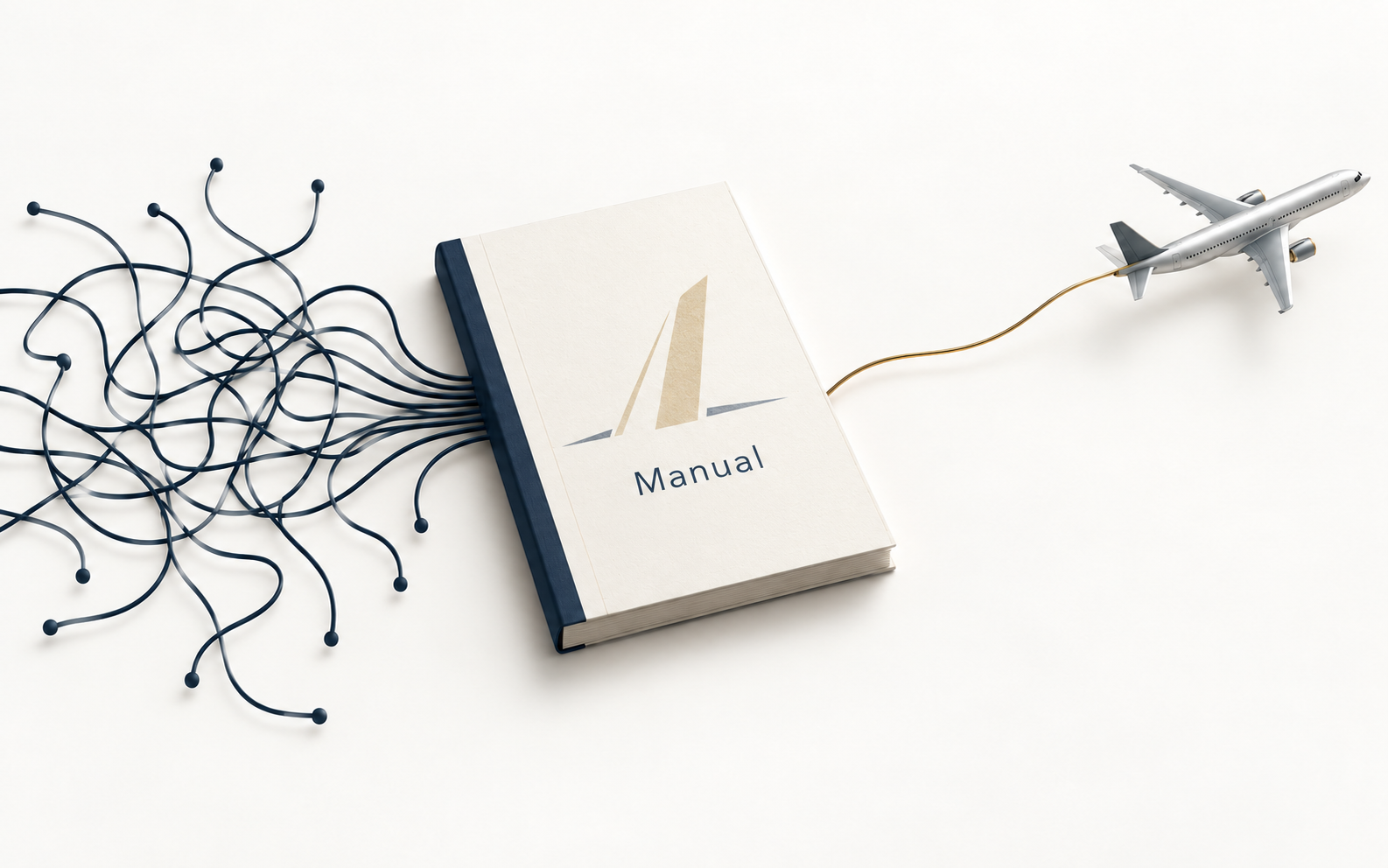
A Written Practice may identify responsibilities that have not yet been formally assigned, records that need to be established or qualification arrangements that require further development.
We make these matters visible rather than leaving them buried in the document.
Where needed, we can also help you put the necessary arrangements in place, from qualification records and training controls to examination arrangements and related procedures.
The extent of this support is agreed with you, based on what your organisation actually needs.
Reviewing an existing Written Practice

You may already have a Written Practice that has been in use for years. It may have passed previous audits and served your organisation well.
But requirements change. NDT capabilities evolve. And sometimes a document accumulates restrictions, inconsistencies or outdated provisions that nobody has had the opportunity to examine properly.
We can review your existing Written Practice against current requirements, identify gaps and unnecessary complexity, and recommend practical improvements.
Whether you need an independent technical assessment, an update to the applicable revision of EN 4179 or NAS 410 or a more substantial revision, the starting point is the document you already have, and what your organization needs from it today.
A Document Designed to Remain Useful
A Written Practice is not a document that should be developed once and then forgotten.
As NDT capabilities evolve, customer requirements change or personnel qualification arrangements are modified, the organisation must be able to review and maintain its framework without unnecessary complexity.
Our aim is to deliver a Written Practice that is not only compliant at the time of development, but also clear enough to support effective implementation, consistent decisions and controlled revisions over time.
Above all, it should help the employer maintain confidence in the competence of the people entrusted with performing and evaluating NDT inspections.
Let’s Discuss Your Written Practice
Whether you are establishing a new NDT operation, expanding existing capabilities or reviewing an established personnel qualification system, the starting point is understanding your organisation and its requirements.
Tell us about your NDT operation and what you need your Written Practice to achieve.